Q: Why do people need to save for retirement?
A: When we look at retirement savings for Malaysians, the main issue is not so much about how much money people have, but also the quality of life that they will have upon retirement. That is why we are working with the government to address a number of policy issues. That includes catering for the fact that people are going to live much longer.
If you look at our statistics, the average lifespan for Malaysians is about 75. When the retirement savings system was being set up in the 1950s, the average lifespan was about 55.
That’s why one of key changes that we’ve been looking at from the social security point of view is to increase the minimum retirement age, which happened two years ago when the government raised the retirement age from 55 to 60. This is to give people the opportunity to work longer.

Secondly, under the new amendments to the act, we are going to create a third withdrawal age, which is 60. For Malaysians who continue to work after 55 and make new contributions to EPF, it can only be accessed at 60. This is to make sure that apart from the withdrawal at 50 and 55, at 60, when you finally retire, you will have some money that can be withdrawn to help you with retirement planning.
The retirement planning part is important. Firstly, because of the age issue, and secondly, because most Malaysians need to save more to cater for the increasing cost of living, especially medical costs.
That’s why you will notice that the government has steadily increased the minimum wage provision, and under the last budget, the minimum wage is RM1,000 per month in Peninsular Malaysia. The idea is to make sure that we restructure the economy, so when people earn more, they can save more and retire with more money in their accounts.
 Q: What is the situation now in terms of how much money an average member has when he retires?
A:
Q: What is the situation now in terms of how much money an average member has when he retires?
A: For EPF, we try to provide guidance to our members, as not everyone is the same. Everybody has different savings outside the EPF system and different expenditure. It’s hard to have a standardised amount. But, EPF generally has advised people that they should try to retire with about RM196,000 in their EPF account. That will provide you with a basic amount of RM820 per month for 20 years.
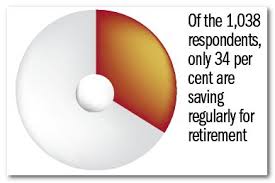
That is the advice that we give people, to try to achieve this amount when they reach 55. But, only about 23 per cent of our members at 55 have that amount.
The main reason for that varies, because during their career, they’ve withdrawn from their EPF accounts for housing, medical and education. The actual amount that they have at 55 is usually not the amount required.
I have to emphasise again, you cannot use it as an amount that applies to everybody as many people have savings elsewhere. If they withdrew money from EPF to buy a house, now they have assets in the form of a house.
We try to advise people to have a plan for their retirement. That’s why EPF has introduced a retirement advisory service, which is available in eight locations nationwide.
Members can come to our branch for free advice on their retirement planning, so they can calculate how much assets they have, what are their expenditure profile and how long the money will last.
It is a successful programme and we have a lot of positive feedback. We do it for free. Our staff are trained to be certified financial planners and we don’t sell products to our members, unlike other financial institutions. So, it is neutral advice that people can use for their retirement.

Q: Is it safe to say that Malaysians don’t generally save enough for their retirement?
A: I think Malaysia has the same issue as most countries. The average person does not understand enough about financial literacy or retirement planning to make sure that they have enough savings when they retire. So, as in all countries, only about the top 10 to 20 per cent of the working population understand that they need enough retirement savings. It is not a big problem for them.
What we are trying to do is to help the next 40 to 50 per cent of the population, who, with a bit of planning and advice, can probably change their investment and savings habit during their working life to cater and, at least, have enough money for their needs when they retire.
A common problem among Malaysian workers, is that they tend to spend first and save the balance, whereas you have to encourage people to save first and spend only the balance. That simple shift in terms of how you approach your monthly salary will help you a lot in your savings. We try to work with other agencies and unions to educate people on financial literacy and savings.
Q: 23 per cent has at least RM196,000 in their accounts at the age of 55. This is considered low. What is the level that EPF is comfortable with?
A: Like I said, the number we set is a guidance, so people can understand that if you have this amount at 55, you will have at least about RM800 a month for 20 years. The whole idea is to encourage people to understand and plan for their retirement.
As mentioned earlier, every individual is different. We want people to think about it and save for the sake of retirement. If you retire and need about RM2,000 per month to live, then how much should you have in your entire savings portfolio? The idea is to start engaging the members for them to understand.

For some people, they can retire with RM150,000. Their plan is to go back to their
kampung and spend less every month as they already have a house there. If you plan to retire in Kuala Lumpur, you need about RM1,500 to RM2,000 per month to survive.
Q: Most people tend to spend first, save later. So, you need to change that?
A: We try to encourage people to think carefully. That’s why we work with employers to start this education earlier in people’s working lives. So when people start working, they have better savings habits. Saving some of the salary every month and budgeting the rest for expenditure will help them plan for the future.
Q: Can people still save their money in EPF after their retirement age?
A: We’ve gone to the Parliament and Dewan Rakyat approved our bill. Once it becomes an act, it will allow people to continue saving in EPF until the age of 100. This is to cater for the long term. We know people would be living longer.
The whole point is you can keep the money in EPF, where you can still get the dividends and it is up to you what you want to do. We preserve the withdrawal flexibility at 55. You have the choice to either take out in full or keep it and continue enjoying dividends.
 Q: How do you manage the informal sector, people who are not in the government sector or salaried workers?
A:
Q: How do you manage the informal sector, people who are not in the government sector or salaried workers?
A: The EPF scheme is open to everybody, whether you are in formal or informal employment. People who are self-employed can apply to open an account with EPF, just like any other salaried worker. The government encourages the informal sector to do this and even topped up this account. Right now, the amount of top up is RM120 a year.
We have been campaigning a lot, especially with petty traders and people in the entertainment industry. A lot of artistes contribute consistently with us. They don’t have formal employment and work on a project to project basis. We encourage them to put their money with us.
The only limitation for them is we have a cap of RM60,000 a year for them to contribute. This is because we have to comply with the anti-money laundering laws. So, we put the RM60,000 cap, which is more than enough for them to build up savings for their retirement.
Q: Why RM60,000? Is it because there are people who want to put more in EPF and let EPF manage their money rather than managing their own money?
A: The reason why we have a Policy of RM60,000 a year is because the main purpose of EPF is to help people with their retirement requirements.
We are not a commercial fund manager. So, RM60,000 a year, in terms of voluntary contribution, is more than enough. RM60,000 a year, for a 30-year career, that’s a lot of money, plus the accrued dividends and everything else.
We’ve got a lot of requests, especially from the big businessmen and tycoons who said they were happy to put in millions. But, we are here not to manage your money.
If you have a few million a year to invest, it is better for you to do it yourself. You don’t actually need us to help you with your retirement plans.
Q: Is our retirement money with EPF safe?
A: Yes, I think there are some questions, especially in this current climate. You need to be assured and one thing that people don’t realise is that the money that you save with EPF is completely separate from the government’s money. EPF’s money is managed independently. EPF does invest in government bonds, just like others, such as insurance companies and global funds. We buy and sell government bonds, and we buy and sell investments all the time.
All EPF investments are audited by the National Audit Department annually. In fact, we have the highest returns among all the agencies audited by the department. Our assets are professionally managed. There are three global banks that act as custodian of our assets. They ensure that the assets are accounted for on a daily basis. So, I don’t think there should be any issue of EPF assets being at risk or not being safe.
The problem, I guess, is people like to politicise the issue and for the average member who may not fully understand, it becomes a concern. From a governance and integrity point of view, EPF businesses have never been an issue. Our governance structure is very strict. We have limits in terms of everything that we invest in. We can never be over-exposed to one thing or another.
Of course, when we look at EPF as a portfolio, as a whole, we are well spread on many things. At any given time, any particular investment may go up or down, but the main point is the portfolio as a whole is healthy and can generate the kind of returns that we want.
 Q: While they are concerned if their money is safe or not, people also expect EPF to pay high dividends. How do you manage people’s expectations?
A: The problem is one of balance. The issue is basically you can only get a higher return when you are willing to take a higher risk. EPF does not go for high dividends at the price of neglecting risks on our portfolio. The two key goals of EPF are to ensure the safety of people’s capital, and in any given year, we can achieve at least 2.5 per cent dividend as stated under the EPF Act.
Secondly, to ensure there is real growth in people’s fund. Our main target on an average three-year basis is to make sure that the growth is inflation plus two per cent. We always stress this to the people. The way EPF is set up is to ensure that as far as possible, we can meet these two targets. The whole reason for this is that when you get inflation plus two per cent over the continuous period of longer time, your money will have real growth. The difficulty today is with all the quantitative easing going on in the world, yields and interest rates across the world have come down tremendously.
For example, if you invest in the safest possible investment, which basically is US Treasuries or Japanese government bonds, you will probably only get 0.5 per cent yield, which is nothing. There is no way you can achieve the target of 2.5 per cent. That is if you want to have the safest kind of investment. If you go up the risk spectrum, what happens is that for every additional 100 basis point or 1 per cent of the yield that you get, you have to add risk elements to your investments.
If you look at government security, Malaysian Government Securities for instance, which is the safest form of ringgit investment in Malaysia, for a 10-year issuance today, you will only get roughly about 0.4 per cent interest or yield. So, you can imagine how hard it is for most fund managers today to actually get high returns. That’s why we have been telling people that we target inflation plus two per cent. We are lucky at this point of time, since inflation is low.
 Q: When we talk about ageing population and retirement savings, there is also pension reform happening in other countries. There is increasing preference towards adopting the defined contribution model. What is the defined contribution model?
A: There are two main models of retirement savings in the world. One is defined contribution and another is defined benefit. Under defined contribution, which is like EPF, you retire only with whatever money you have contributed. That means you essentially provide for your own retirement.
Defined benefits is different, where somebody gives you a certain amount of benefits, whether it is pension or medical benefits. Defined benefits in the past in some countries could include corporate pensions. You work in the company long enough and after retirement, the company gives you a pension every month for the rest of your life. Some countries, such as the United Kingdom, they call it state pension, where when you reach a certain stage, the government will pay you a state pension every month.
If you look at civil servants in Malaysia, it is on defined benefit. When they retire, they will get pension and that pension is a defined benefit. Nothing to do with how much they put in the system. For instance, like the pension system in Malaysia, it is basically the obligation or the liability of the government to ensure they pay these pensions to civil servants.
The main reason why many countries are moving to defined contributions or some kind of hybrid is because the defined benefits system has become a huge burden on them. So, they are scrapping defined benefits or making defined benefits much harder to achieve.
In Europe, during the financial crisis, they maintained the state pensions but raised the age of entitlement. Whereas before, they were allowed to collect the state pension at the age of 60, now, when they can no longer afford to pay, they said it must be at 65. The benefits will be at the later stage. From the government’s point of view, they save on their obligations. Whatever defined benefits they promise to the citizens, they have some kind of restrictions as they can’t afford it any more.
There are basically two things. First, people are living longer. Previously when government accrued, they used the assumption that people will live until the age of 70 or 75. But in advanced countries, people are living until 80 or more. So, the cost to the government in accrual liability is building up. Secondly, the rate of return that defined benefits funds can get has also collapsed.
With the quantitative easing, the yields across the globe has fallen. Previously, a lot of defined benefits such as corporate pension or government pension plan, when they set aside the money to cover this liability in the future, a lot of them made assumptions that they could grow the funds by eight per cent or 10 per cent per annum.
When the yields collapsed, you can’t reach eight to 10 per cent any more. This means you can’t grow your funds fast enough to meet your obligations and liabilities. So that is why most countries have moved away. For instance, countries like Singapore are entirely Central Provident Fund, even for the civil servant.
If you look at other countries, they moved away from defined benefits. They no longer guarantee you state pensions. You have to contribute towards the fiscal plan. The UK, for instance, has gone this direction as well.
The idea is the government of that country has to cut off its liabilities. If you look at our Malaysian budget, a huge portion of the budget for emoluments and pensions is growing bigger and bigger.
 Q: Can we talk about the governance side, the image and prudence?
A: In terms of governance structure, the EPF board is an independent panel. It looks at the scheme as a whole, including our withdrawal scheme and the social security aspect of it. It is well represented by employers and trade unions, as well as the private sector and independent members. There is plenty of governance there in making sure that whatever policy that we come up with is a fair reflection of both the employers and employees, in terms of interest and benefits.
And the investment panel, of course, is very independent. The majority of the panel are independent members. We have three independent panels, plus one representative from Bank Negara and one from the Ministry of Finance.
We have a full risk management model which we took from a lot of financial services companies. We have the entire compliance functionality as well. We invest a lot in our system.
Most people don’t know, but part of the reason why the EPF service level is so good is because our core system runs like a banking system. It is almost like a bank with 14 million accounts. That is why
our ability to process is very much based on that kind of high-end infrastructure that we invest in.
On our investment side, we always benchmark it to global standards, in terms of compliance, cyber security, trading limits and everything else.
 Malaysia is heading towards an aged nation by 2030 but as many as 4.46 million or 67% of Employees Provident Fund’s active contributors have not achieved the basic saving requirements.Deputy Finance Minister Datuk Chua Tee Yong said an EPF member needed to have at least a minimum savings of RM820 per month for 20 years, which would come up to RM196,800 in his or her old age.


