Saturday, October 17, 2020

Who Owns The Customer

One key question that has challenged the industry for decades is that of 'Who owns the customer?' Are agents/brokers competing with carriers for digital customers and self-service? Or can the two happily co-exist (or at least get along)? 

Captive/tied/exclusive agents, these questions should in theory be simple, as the insurer should own the customer with the agent simply serving as an extension of the insurer. However, in reality, few agents are employees anymore, and many 'exclusive' agents are not exactly exclusive. Nevertheless, these agents do typically seek to build the insurer's brand with their core base of customers by utilizing their branded offices, marketing, etc. for their local outreach.

Independent/non-captives/non-exclusive agents have the flexibility to offer various products from various companies with a better compensation model but present a challenge to insurers. They extend a carrier's reach at little upfront cost, but their loyalty tends to be tied to compensation plans, ease of doing business with a particular carrier, and how a carrier's underwriting standards match up to their client base. As a result, this is where much of the friction lies with customer ownership - agents who want to own the customer, versus carriers looking to grow their wallet share with those customers.

Sunday, October 11, 2020

Malaysia Insurers Infringing Competition Act

General Insurance Association of Malaysia (Piam) plans to appeal against the Malaysia Competition Commission’s (MyCC) decision to penalise the association and its 22 members for infringing the Competition Act 2010.

In a statement today, Piam expressed its profound disappointment over MyCC’s decision on September 14 in relation to an arrangement between Piam and the Federation of Automobile Workshop Owners’ Association of Malaysia (FAWOAM) on the minimum hourly labour rates and spare part prices for six commonly used vehicle models, namely Proton, Perodua, Naza, Nissan, Toyota and Honda.

“After three years, Piam is deeply disappointed that MyCC has released a decision that does not fully take into consideration the voluminous evidence tendered and legal arguments submitted. MyCC’s decision rejects legal and regulatory certainty and is a decision against consumers and the motoring public of Malaysia. Piam will lodge a strong appeal against the decision,” it said.

It said under the direction of Bank Negara Malaysia (BNM) to safeguard the interests of consumers, Piam had agreed with FAWOAM to resolve the prolonged dispute between insurers and repairers over spare parts trade discounts and labour rates.

Besides that, Piam said it had tendered clear and robust evidence to MyCC that the arrangement with FAWOAM benefited consumers in terms of faster turnaround time for repairs, less complaints and growth in the numbers of repairers, thus enhancing the availability of repairers for accident repairs.

It added that an independent economist’s report by RBB Economics United Kingdom, which showed clear and robust tangible evidence of how consumers benefitted from this agreement, was also presented before MyCC on two occasions.

Friday, October 2, 2020

Lifepal - Indonesia InsurTech

Both the insurance and technology industries in Indonesia have lately generated great interest among national and foreign investors. In addition, the technology industry is also revolutionizing the life of millions of people in Indonesia, it is changing consumer behaviors and is driving the development of the entire country. Insurtech is therefore one of the most exciting and promising industries to be exposed to today in the country.

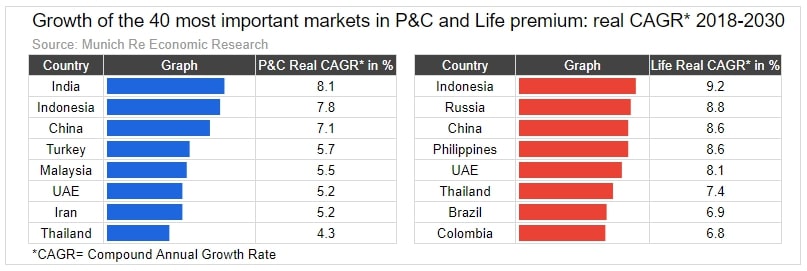
Indonesia remains the fastest growing market for insurance globally. A study by Munich Re Economic Research shows that Indonesia will lead the growth in Health and Life Premium with CAGR of 9.1% from 2019 to 2030. For total premium income in the whole year of 2019, insurance companies operating in Indonesia secured Rp185.3trn (USD12.6bn) for life insurance and Rp80.12trn (USD5.5bn) in total premium income for health insurance.


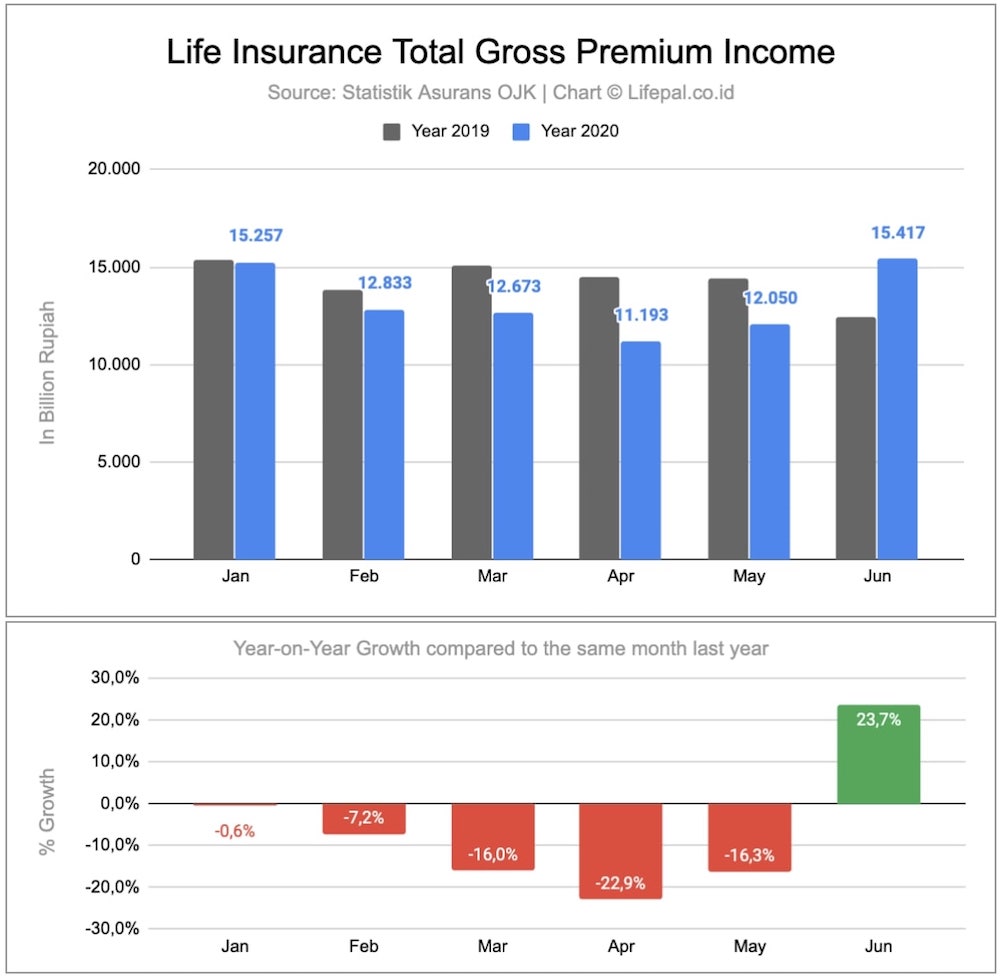
Furthermore, the insurance industry in Indonesia has benefited from the COVID situation thanks to a higher awareness among consumers about life and health risks. A chart shows the speedy recovery of the Indonesian gross premium income for life insurance in 2020 after the pandemic hit earlier in the year. Moreover, the growth percentage in June brought the insurance premium income in June 2020 into a number exceeding June 2019.


Despite growing at an exciting rate, buying insurance for Indonesian customers is not easy and transparent. Customers often have limited access to options as they need to talk to insurance agents that are not always educated about the insurance policies, not allowed to sell multiple brands, and do not help customers after-sales.

In some cases, traditional agents have created mistrust and are no longer capable of helping more educated and digital consumers. The confusion for all the terminologies and bias recommendations from agents has made finding the perfect insurance policy more of luck than a carefully planned action.

Lifepal aims to solve these problems by being the trusted financial advisor thanks to technical content and policies reviews about insurance and financial planning, the possibility to find and compare from the largest selection of policies in the country and receive convenient support and assistance pre and post-purchase such as easy claim, policy management and emergency support.

Lifepal has gained the trust of over 4 million monthly visitors, 1 million social media followers and 50 insurance brands with more than a selection of 200 products ranging from health, life, automotive, employee benefits, and other insurance products. These numbers make Lifepal the biggest insurance marketplace, in the country by size of the inventory, online visitors and registered users.

Lifepal technology is directed to use data of Lifepal’s millions of visitors and understand their needs well before matching them with the most relevant insurance policy for their needs, wants, and budget.

Aligned with the Indonesian government’s target to increase financial literacy, Lifepal routinely publishes data-based articles and social media posts, making clear topics within personal finance, financial planning, investments, business, stocks, and insurance.

The varying backgrounds in the team help them extract and articulate data in a manner that is relatable and easily understandable by the public. Lifepal hopes to help more Indonesians to have a true understanding of their own financial planning and protection.

Policy Loan - Friend Or Foe

One of the reasons some people buy cash value life insurance is the potential to borrow money from the policy later on. When you bought your insurance policy, the insurance agent may have touted that you would be borrowing your own money and paying yourself back.

Insurance agents and companies may promote loans as an easy way to receive tax-free money from your life insurance policy. However, policy loans are more complicated than they appear.

Policy loans need to be reviewed and monitored. If a policy loan is not monitored, a policy could slowly deteriorate, losing the minimum cash value needed. This can leave you with the unpleasant choice of making substantial loan repayments or having a large phantom income tax gain.

What is a Life Insurance Policy Loan - Policy loans are available on most permanent cash value life insurance policies. Policy loans are not the same as other loans: Policy owners are not required to repay the loan. Keep in mind, the insurance company will charge interest on the policy loan.

When you borrow money from your life insurance policy, you are borrowing your own money. It is essentially an advance of money that could be received from the policy either through a surrender of the policy or the payment of the death benefit. It is money that you, or your beneficiary, would have received anyway. The policy’s cash value acts as collateral for the policy loan.

If you never pay back the policy loan during your lifetime, the amount is deducted from the death benefit when you pass away—meaning that your beneficiaries repay the loan.

How Does a Life Insurance Policy Loan Work - Life insurance policy loans are available on life insurance policies where there is sufficient cash value to borrow against. The available loan will be a percentage of the cash value. You must pay interest on the policy loan.

To initiate a policy loan, you’ll need to contact your life insurance company. Before taking out a policy loan, find out what will happen to the components of your policy after the loan. You can do this by requesting an in-force illustration that will reflect the policy loan based on your plans—whether you’ll borrow more money, repay the loan or maintain the loan.

Be sure the in-force illustration also reflects whether you will be paying interest on the loan out-of-pocket or if you will be borrowing interest as well.

And review the following terms of the loan - The insurance company will charge interest in advance or in arrears:

A: Interest in advance
The insurance company charges interest for the full year. This assumes that the loan is continued for that policy year. If the loan is taken out in the middle of a policy year, interest is charged for the remainder of the policy year at the time the loan is taken out. If a loan repayment is made during the policy year, the insurance company will typically not provide any credit or refund on the interest paid in advance.

B: Interest in arrears
The insurance company charges interest at the end of the policy year. Interest accumulates daily. If a loan is taken out in the middle of a policy year, interest starts to accumulate that day. If you make a loan repayment in the middle of the policy year, this would decrease the daily loan interest amount, thereby decreasing the loan interest due at the end of the policy year.

The interest rate may be fixed or variable. Fixed interest rates are guaranteed, so you will know in advance what your loan interest will be each year. Variable interest rates can change each year. Variable interest rates will be disclosed on your policy’s annual statement and with premium notices when loan interest is due.

The money you have taken out can still earn gains. The insurance company will pay you interest (or dividends) on the amount borrowed, although this rate is usually lower than the interest rate credited to the remainder of cash value. On certain policies, you will receive the same interest rate.

Whole Life Insurance policies use the term “recognition” to define how much interest is credited to the amount of the cash value that is loaned out. If your life insurance company uses the non-direct recognition method, you will receive the same dividend on your all cash value. If your company uses the direct recognition method, you may receive a lower dividend on the amount of your cash value that constitutes the loan.

Whole life policies may also have an optional automatic premium loan provision. If you don’t pay your premium due, it is automatically deducted from the cash value through a policy loan.

Keep in mind that Interest on a policy loan is generally not tax-deductible.

How to Monitor a Life Insurance Policy Loan - The insurance company will not require you to pay back the loan balance. Nor do they provide any loan repayment schedule. You have the option each year to pay loan interest out-of-pocket or to borrow the interest. If you choose to borrow the interest, the loan balance will compound, which means that the interest due each year will compound.

It’s important to request an in-force policy illustration annually to determine the impact of a policy loan. Your request should include the following scenarios along with any others that reflect your plans:
a: Re-paying the policy loan in-full
b: Paying premiums and interest out-of-pocket
c: Borrowing future premiums and loan interest
d: Showing what happens if your current premium payments stay the same
e: Showing the premium needed to endow the policy at maturity
f: Any other action you’re considering, such as taking a partial withdrawal or changing your dividend option

Why is a Life Insurance Policy Loan Dangerous - The in-force policy illustration will help you determine how long your policy will remain in-force. You will find that the larger the loan, the more impact it will have on your policy.

For example, with an initial policy loan of $50,000 and a loan interest rate of 8%, the loan interest in year 1 will be $4,000. If you borrow the loan interest, your loan balance would increase to $54,000 (initial loan amount of $50,000 plus the loan interest of $4,000). The loan interest in year 2 would increase to $4,320. The loan balance would increase to $58,320, if the loan interest is borrowed again ($54,000 loan balance plus the loan interest of $4,320). As you can see, this rapidly increases the policy loan balance

Here’s how it works - On a permanent cash value life insurance policy, the cash value increases every year. This reduces the total risk to the insurer because it will pay out only the death benefit when you pass away and absorb the cash value. Mortality costs—the actual cost of insurance for you—are also increasing each year because you get older. But that increase is usually offset for the insurer by the decreasing amount at risk.

If you’ve taken out a loan from the cash value, the lower cash value will result in lower earnings. If your premium payments aren’t enough to cover the mortality cost and other fees, the insurer will take it from your cash value. Now your cash value is being depleted by multiple demands—the loan, lower earnings and fees. And if the cash value goes to zero the policy will terminate, unless you make an infusion of premium.

If the policy terminates, you’ll get dinged by an income tax bill on the loan money you took.
Calculating Taxable Income from a Policy Loan

Here’s how to calculate the potential gain in the policy that would be subject to income tax:
Add the net cash (surrender) value, any dividends received (either prior or accumulated) and the outstanding loan balance.

Subtract the cost basis (sum of premiums paid into the policy).

Example: If a life insurance policy terminates with a loan balance of $100,000 and a cost basis of $50,000, the taxable gain would be $50,000.

Please note that the above example is a general rule and may not apply to every situation. You should consult your tax advisor to confirm whether you have a taxable gain.

Your life insurance company will be able to provide you with the cost basis, along with the gain that they will report to the Internal Revenue. While a policy loan can provide you with immediate funds, it can have a number of drawbacks. Know what you’re getting into before you take the cash.

Korea Non-Life Trimming Staff

Non-life insurers are trimming their workforces in motor insurance sales channels, to cut operating costs amid falling revenue and rising loss ratios. Industry officials said the outlook for the business remains murky, as they cannot control the price of insurance independently despite declining profitability, in the face of the government's tight regulations.

Motor insurance is mandatory and the government controls the premium rates. Insurer cannot raise its auto insurance premiums to the level it wants, which means it has to find other ways to offset rising loss ratios.

Last year, Lotte Non-Life Insurance downsized almost half of its workforce in its auto insurance telemarketing sales channel, in a bid to reduce what it believed to be "inefficient expenses".

"The decision reflects customers' growing preference for online subscription channels," a company official said. "Fewer people rely on telemarketers when they sign or renew their auto insurance."

Other mid-tier life insurers such as Hanwha General Insurance are also slashing their headcount. The Hanwha affiliate accepted voluntary resignations last year, and 30 officials left.

Motor insurance profits keep declining due largely to an increase in car repairs and maintenance costs, with more customers purchasing overseas luxury vehicles.

Thursday, October 1, 2020

Indonesia Life Insurance Growth Contracted

The life insurance industr
y will see a contraction in premium income this year on the back of the COVID-19 crisis, despite people’s rising awareness on health, the Indonesian Life Insurance Association (AAJI) has stated. 

AAJI chairman Budi Tampubolon said on Sept. 25 that the association expected the industry's premium income to contract 2.5 percent year-on-year (yoy). The life insurance industry’s premium income has contracted 2.5 percent yoy to Rp 88.02 trillion (US$5.9 billion) in the first half of the year from the same period last year. The decline in new premium income and renewed premiums contributed to the lower figure.

In comparison, the industry booked Rp 196.69 trillion in premium income last year, up 5.8 percent compared to 2018, according to AAJI data. 

Insurance penetration in Indonesia has been low for a long time. According to the latest data from the Organization for Economic Cooperation and Development (OECD), Indonesia’s insurance spending in 2018 was only 1.79 percent of the country’s GDP, lower than in neighboring Malaysia, where it was 4.4 percent.

In the first half of this year, new premium income dropped 2.7 percent yoy to Rp 54.57 trillion, while renewed premium income fell 2.2 percent yoy to Rp 34.91 trillion, AAJI data show. Despite the slowdown in premium income growth, the group saw improvement in new premium income in the second quarter of 2020 from the previous quarter. 

In the second quarter, new premium income had grown 4.82 percent to Rp 27.18 trillion from the Rp 25.93 trillion booked in the first quarter of the year. 

There is a significant public’s increased awareness in having protection and managing their income during this uncertain time. Since the pandemic, a quarter of Indonesian people are feeling anxious about their health, while 35 percent want health insurance. 

Coupled with relaxations from the Financial Services Authority (OJK), could improve the country’s life insurance industry in the second half of the year. Since the beginning of the COVID-19 outbreak, the OJK has rolled out several relaxations for the insurance industry, including delaying the monthly, quarterly and yearly performance reports, as well as relaxing the solvability rate accounting method, extending the grace period for receivables and allowing investment-linked insurance products to be sold online. Previously, investment-linked insurance products could only be sold in person to ensure consumers were well informed. 

However, as the public is getting used to digital technology during the pandemic, the association is suggesting that the OJK make the policy, which allows online sales of investment-linked insurance products, permanent. However, the association stated that it would still encourage life insurance players to fulfil the requirements to conduct online sales of such products. 

Meanwhile, the association also recorded that 56 life insurers have paid a total of Rp 216.03 billion in COVID-19 claims to 1,642 policies between March and June. Even though the outbreak was declared a pandemic and the treatments are fully paid by the government, life insurers are still paying the claims as a form of empathy and solidarity to our customers. 

As for the claims and benefits outside of COVID-19, the industry had paid a total of Rp 64.22 trillion in the first half of this year. This figure was down 1.9 percent yoy from the same period last year. The claims and benefit payments were dominated by surrender claim payments of Rp 37.87 trillion, 58.7 percent of the total claims, followed by matured claim payments of Rp 7.26 trillion, 11.2 percent of the total claims. 

Despite the payment drop in the first six months of the year, AAJI had estimated that there would be an increase in payment this year. With a compound annual growth rate of 15 percent from 2008 to 2019, we hope we can book higher claims and benefit payments this year to show our commitment to our customers.

Jiwasraya - Fine & Life Imprisonment

Prosecutors have sought sentences ranging from 18 years to life in prison for former executives of state insurer PT Asuransi Jiwasraya for their alleged involve
ment in graft and money laundering that has resulted in trillions of rupiah in state losses. 

The prosecution demanded a life sentence and Rp 1 billion (US$67,256) fine for former Jiwasraya financial director Hary Prasetyo, 20 years and a Rp 1 billion fine for former president director Hendrisman Rahim, and 18 years and a Rp 1 billion fine for former finance and investment division head Syahmirwan. Prosecutors said that the three defendants were guilty of corruption that caused losses of Rp 16.8 trillion in state funds.

“[The prosecution] demands that the panel of judges officially and firmly convict the defendant, Hary Prasetyo, of several acts of corruption,” public prosecutor Yanuar Utomo.

According to the prosecution, Hary, Hendrisman and Syahmirwan had violated articles 2 and 18 of Law No. 31/1999, as amended by Law No. 20/2001 on corruption eradication, and Article 55 of the Criminal Code. “[The crime] was a deliberate, structured and massive act that led to the financial difficulties befalling Jiwasraya customers,” Yanuar said.

Other defendants in the case are publicly listed property firm PT Hanson International president director Benny Tjokrosaputro, publicly listed mining company PT Trada Alam Minera president commissioner Heru Hidayat and PT Maxima Integra director Joko Hartono Tirto. 

Jiwasraya was first accused of mismanagement when it invested its premium revenue from the JS Saving Plan, one of the company’s insurance products, into so-called pump-and-dump stocks. As a result, it failed to pay out Rp 16 trillion (US$1.1 billion) in matured policies due in February to its policyholders. In June, the Attorney General’s Office named 13 asset management companies and a Financial Services Authority official suspects in the Jiwasraya case.